
Mali Car Import Guide — At a Glance
| Key Information | Details |
|---|---|
| Vehicle Import Destination | مالي |
| Origin | Dubai, UAE |
| Typical Overall Transit Time | Approximately 4–8 weeks, depending on vessel schedules, port processing, customs procedures, and inland transportation |
| Main Shipping Routes | Dubai → Dakar, Senegal → Bamako, or Dubai → Abidjan, Côte d’Ivoire → Bamako |
| Ocean Freight | Dubai Port → Coastal West African Transit Port |
| Inland Transportation | Coastal Transit Port → Mali by road |
| Popular Vehicle Choices | Toyota Hilux, Toyota Land Cruiser, Toyota Prado, Toyota Corolla, Nissan Patrol, Mitsubishi L200 |
| Vehicle Eligibility | Requirements depend on the vehicle and regulations applicable at the time of import; confirm current requirements before purchase |
| Key Documentation | Commercial Invoice, Packing List, Bill of Lading, Dubai Export Certificate and other applicable customs and transit documents |
| Mali BESC | Electronic Cargo Tracking Note required for applicable maritime shipments destined for Mali |
| Customs Valuation | Determined according to Mali Customs rules and the vehicle’s applicable valuation method |
| Main Import Costs | Vehicle price + Dubai export costs + ocean freight + customs duties/taxes + destination charges + inland transportation |
| Final Destination | Bamako or another agreed delivery location in Mali |
| Suitable For | Private buyers, commercial fleets, construction, agriculture, mining, NGOs and business operations |
What the 4–8 Week Transit Time Can Include
| Shipping Stage | What It Includes |
|---|---|
| Vehicle Preparation & Dubai Export Documentation | Vehicle preparation, export paperwork, customs processing and shipping documentation |
| BESC Processing | Preparation and processing of the required BESC cargo-tracking documentation for the maritime shipment |
| Ocean Marine Freight | Sea transportation from Dubai Port to the selected West African coastal port |
| Port Handling & Discharge | Vessel discharge, terminal handling and destination-port procedures |
| Customs Transit Arrangements | Applicable customs transit documentation and procedures for moving the vehicle toward Mali |
| Overland Transportation | Road transportation from the coastal transit port across the applicable regional corridor to Bamako or another destination in Mali |
| Border & Customs Procedures | Border inspections, document verification and applicable customs formalities |
Transit stages can overlap, and actual delivery times vary according to shipping schedules, port congestion, customs processing, border conditions and inland transportation.
Mali is an important market for imported vehicles, with demand coming from private buyers, businesses, commercial fleets, construction and agricultural operators, mining-related activities, and humanitarian organizations. Because Mali is landlocked, vehicles sourced internationally normally reach the country through a coastal West African transit port before continuing by road.
Dubai is a major international vehicle sourcing and re-export hub, offering access to a broad selection of new and used vehicles and established export logistics. For buyers in Mali, sourcing from Dubai can provide access to Japanese, Korean, American and European vehicles while allowing the export process to be coordinated from one location.
At SK Motors FZCO, we assist customers with vehicle sourcing, inspection, Dubai export documentation, shipping arrangements and coordination with logistics partners for delivery toward Mali.
Why Import Vehicles from Dubai to Mali?
Sourcing a vehicle from Dubai can provide several practical advantages for Malian buyers and businesses:
- Wide Vehicle Selection: Dubai’s automotive market provides access to new and used Japanese, Korean, American and European vehicles in a wide range of specifications.
- Competitive Vehicle Pricing: Dubai’s large automotive trading market creates strong competition between dealers and exporters, which can provide competitive sourcing opportunities depending on the vehicle and market conditions.
- Export Infrastructure: Dubai has established vehicle-export, shipping and logistics services that can support international vehicle purchases.
- Vehicle Preparation: Exporters can arrange inspection, cleaning, detailing and other preparation services before the vehicle leaves the UAE.
- Centralized Export Support: Working with an experienced exporter can simplify vehicle sourcing, export documentation, shipping coordination and communication with logistics partners.
Popular Vehicles for Export to Mali
Vehicle selection for Mali should take into account road conditions, climate, intended use, fuel availability, maintenance requirements and access to replacement parts. Pickups and SUVs are particularly practical for commercial, agricultural, construction and rural applications, while sedans remain suitable for urban and personal transportation.
Toyota Hilux
The Toyota Hilux is a practical choice for commercial fleets, agriculture, construction, field operations and other applications requiring a durable pickup. Its available 4×4 configurations, ground clearance and payload capability make it suitable for a variety of operating environments.
Toyota Land Cruiser — LC70 & LC300 Series
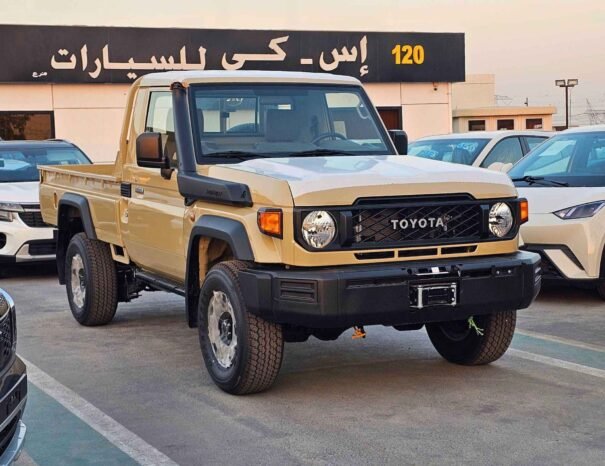
Land Cruiser models are widely associated with durability and off-road capability. The LC70 range, including pickup configurations, can be suitable for demanding commercial and field applications, while newer Land Cruiser models offer additional comfort and technology for private and executive use.
Toyota Prado & RAV4
Toyota Prado and RAV4 models can be suitable SUV choices for customers who want a combination of passenger comfort, ground clearance and everyday usability. The appropriate model depends on the buyer’s budget and intended operating conditions.
Toyota Corolla
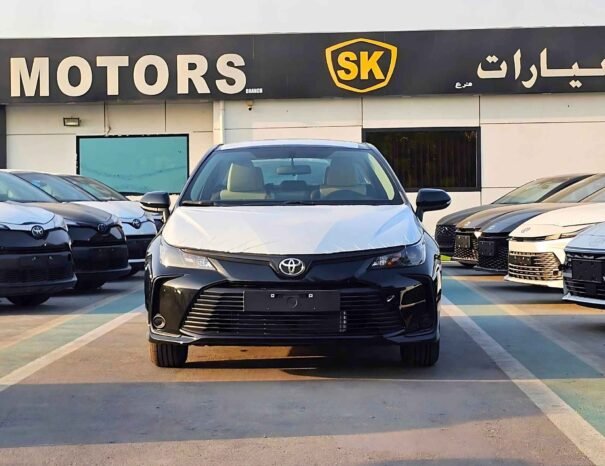
The Toyota Corolla is a practical option for urban transportation and private ownership. Its relatively efficient engines, broad international availability and established maintenance ecosystem make it a model worth considering for buyers looking for a practical passenger car.
Nissan دورية & Mitsubishi L200
The Nissan Patrol and Mitsubishi L200 provide additional options for customers seeking capable SUVs and pickups. The Patrol can suit private, executive and off-road applications, while the L200 is particularly relevant to agricultural, construction and commercial users.
Critical Import Regulations & Customs Compliance (2026)
Vehicles exported to Mali must comply with the requirements of the Direction Générale des Douanes du Mali and other applicable authorities. Importers should verify the current requirements for their specific vehicle before purchase and shipment.
- Vehicle Age & Eligibility: Vehicle eligibility requirements can vary according to the vehicle type, condition, age and regulations applicable at the time of import. Importers should confirm the current requirements with Mali Customs before purchasing and shipping a used vehicle.
- Mandatory BESC: Maritime shipments destined for Mali are subject to the BESC (Bordereau Électronique de Suivi des Cargaisons) requirement. The BESC is an electronic cargo-tracking document used as part of the maritime import and customs documentation process. The applicable filing and validation procedures should be confirmed with the shipping agent or responsible customs/logistics provider before shipment.
- Customs Valuation: Mali has specific rules for determining the customs value of imported vehicles. Under the current vehicle valuation framework, new vehicles are generally assessed using the transaction value, while specific valuation methods apply to used vehicles. For qualifying used vehicles, the regulations provide an Argus-based methodology, including a reference value of 85% of the applicable Argus value in the circumstances specified by the regulation.
- Customs Duties & VAT: The amount payable depends on the vehicle’s HS/tariff classification, customs value, origin, condition and applicable taxes. Passenger-vehicle tariff categories can have different treatment depending on their classification. Importers should obtain a vehicle-specific customs calculation rather than relying on a single percentage for every vehicle.
- Transport & Insurance: Transport and insurance costs to the point of entry into Mali can form part of the customs valuation under the applicable valuation methodology. The current vehicle valuation regulation provides specific rules for estimating these costs in the circumstances covered by the regulation.
Important: Customs duties, taxes, valuation rules and import documentation requirements can change. Before purchasing or shipping a vehicle from Dubai, importers should confirm the current requirements, applicable tariff classification and estimated customs assessment with Mali Customs or a qualified customs broker.
For official customs information and current import requirements, consult the Direction Générale des Douanes du Mali.
Shipping Routes from Dubai to Mali
Because Mali is landlocked, vehicles shipped from Dubai normally travel by sea to a coastal West African port before continuing by road. Two important corridors for Mali-bound cargo are the routes through Dakar, Senegal و Abidjan, Côte d’Ivoire.
1. Senegal Corridor — Via Dakar
Typical Logistics Path: Dubai Port → Port of Dakar → Senegal–Mali Border → Bamako
The Dakar–Mali corridor is an established regional trade route connecting Mali with the Atlantic coast through Senegal. Vehicles arriving at Dakar can continue overland toward Mali subject to the applicable customs transit and border procedures.
The final transit time depends on vessel schedules, port handling, customs formalities, border conditions and road transportation availability.
2. Côte d’Ivoire Corridor — Via Abidjan
Typical Logistics Path: Dubai Port → Port of Abidjan → Côte d’Ivoire–Mali Border → Bamako
The Abidjan–Mali corridor is another established route for moving goods between Mali and the Atlantic coast. Vehicles can continue from Abidjan by road through the applicable customs and border procedures.
3. Alternative West African Corridors
Other coastal ports, including Conakry in Guinea and Tema in Ghana, can serve regional cargo movements depending on shipping availability, destination, commercial requirements and current logistics conditions.
Shipping Methods: RoRo vs. Container
Roll-on/Roll-off (RoRo)
RoRo shipping allows vehicles to be driven onto and secured inside a specialized vehicle carrier. It is commonly used for standard operational vehicles such as sedans, SUVs and pickups and can be a cost-effective option when a suitable sailing is available.
RoRo is generally best suited to vehicles that can be driven or safely moved onto the vessel and do not require the additional protection of containerized shipping.
Container Shipping — 20ft / 40ft
Container shipping places vehicles inside a steel shipping container and secures them for ocean transportation. It can provide additional protection and can be useful for high-value vehicles, non-operational vehicles, or multiple-vehicle shipments where container loading is commercially appropriate.
Containerized shipping may also be considered when the shipment requires the transportation of permitted automotive parts or other cargo alongside the vehicle, subject to the shipping line’s rules and applicable customs requirements.
Indicative Ocean Freight Costs
| Shipping Method | Indicative Ocean Freight Cost (USD) |
|---|---|
| RoRo — Standard Sedan / SUV / Pickup | USD 1,800 – USD 3,500 |
| 20ft Container | USD 3,000 – USD 5,500 |
| 40ft High-Cube Container | USD 4,500 – USD 8,000 |
*Indicative ocean freight estimates only. Actual rates can change according to vehicle dimensions, shipping line, destination port, sailing schedule, season, fuel surcharges, port charges and market conditions. Destination and inland transportation costs may be additional. Contact SK Motors for a current quotation.
Logistics Flow & Estimated Transit Timeline
| Logistics Operational Phase | Estimated Duration |
|---|---|
| Dubai Vehicle Preparation & Export Documentation | 2–5 Days |
| BESC & Shipping Documentation | Depends on shipment and documentation readiness |
| Ocean Marine Freight | 20–40 Days |
| Port Discharge & Transit Processing | 3–10 Days |
| Overland Transportation to Mali | 3–10 Days |
The overall delivery cycle can take approximately 4–8 weeks, although actual timing varies. Individual stages may overlap, so the figures above should not simply be added together.
Factors that can affect the final delivery date include vessel availability, port congestion, documentation readiness, customs processing, border procedures, road conditions and inland trucking availability.
How SK Motors Simplifies Your Vehicle Import from Dubai to Mali
International vehicle importing involves more than purchasing a car. Coordinating vehicle preparation, export documentation, ocean freight, destination-port procedures and inland transportation requires communication between multiple parties.
SK Motors can assist customers through a structured export process:
- Vehicle Sourcing: Help identify a vehicle based on budget, intended use, specifications and availability.
- Vehicle Inspection: Arrange vehicle inspection and preparation before export.
- Dubai Export Documentation: Coordinate the required export documentation and commercial paperwork.
- Shipping Coordination: Arrange the appropriate ocean-shipping option and coordinate with the relevant shipping and logistics partners.
- BESC Coordination: Assist with the documentation and coordination required for the applicable Mali cargo-tracking process.
- Transit Logistics: Coordinate with logistics partners for the movement of the vehicle from the coastal transit port toward Mali.
- Customer Updates: Provide shipment and documentation updates throughout the export process where applicable.
Frequently Asked Questions About Importing Cars from Dubai to Mali
What vehicle age requirements apply when importing a car into Mali?
Vehicle eligibility can depend on the vehicle type, age, condition and regulations applicable at the time of import. Mali Customs has specific valuation procedures for new and used vehicles. Importers should confirm the current eligibility requirements for their specific vehicle before purchasing.
What is a BESC for Mali?
ال BESC (Bordereau Électronique de Suivi des Cargaisons) is an electronic cargo-tracking document associated with maritime shipments destined for Mali. Mali’s maritime transport framework provides for the BESC requirement for applicable Malian maritime freight. The filing and validation process should be confirmed with the responsible shipping or logistics provider before shipment.
How long does it take to ship a car from Dubai to Bamako?
A typical planning estimate is approximately 4–8 weeks, although the actual time can vary depending on vessel schedules, port handling, customs processing, border procedures and inland transportation.
Do I need additional transit documentation if my car arrives in Senegal or Côte d’Ivoire first?
Yes, additional customs transit procedures may apply because the vehicle must travel overland from the coastal transit country into Mali. The BESC is a cargo-tracking document and does not replace all road-transit customs formalities. A qualified shipping agent or customs broker can coordinate the applicable transit documentation, including TRIE procedures where required.
Which port is commonly used to ship vehicles to Mali?
Dakar in Senegal و Abidjan in Côte d’Ivoire are important coastal gateways for cargo moving to and from Mali. The best route for a particular vehicle depends on shipping availability, freight cost, destination, transit arrangements and current logistics conditions.
How much does it cost to ship a car from Dubai to Mali?
Ocean freight varies according to the vehicle, shipping method, destination port and current carrier rates. As an indicative planning range, RoRo shipping for a standard vehicle may fall around USD 1,800–3,500, while container shipping can cost approximately USD 3,000–8,000 depending on container size and shipment conditions. These figures are estimates only and do not necessarily include destination charges, customs duties or inland transportation.
How are imported vehicles valued by Mali Customs?
Mali’s current vehicle valuation rules provide different methods for new and used vehicles. New vehicles are generally assessed using the transaction value where applicable, while qualifying used vehicles can be subject to specific reference-value methods, including an Argus-based methodology. The final customs assessment should be confirmed with Mali Customs or a qualified customs professional.