
A twin turbo engine uses two turbochargers to increase the amount of air supplied to the engine. By forcing more air into the combustion process, twin-turbocharging can help an engine produce more power and torque without relying only on a larger engine displacement.
Twin turbo technology is now used across a wide range of vehicles, including performance cars, large SUVs, pickup trucks and other vehicles designed for demanding driving conditions. However, having two turbochargers does not automatically mean an engine is faster, more efficient or better than every single-turbo engine. The actual result depends on the engine design, turbocharger configuration, tuning, transmission, vehicle weight and intended use.
For international buyers sourcing vehicles from Dubai, understanding the difference between twin turbo, single turbo, twin-scroll turbo and naturally aspirated engines can also make it easier to compare vehicles before purchasing or exporting one.
In this guide, we explain what twin turbo means, how twin-turbo engines work, the different types of twin-turbo systems, their advantages and disadvantages, how they compare with other engine technologies, and what buyers should check when purchasing a turbocharged vehicle for export.
What Is a Twin Turbo?
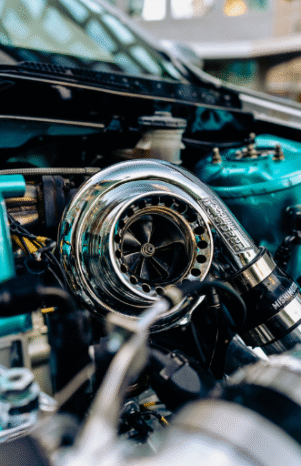
A twin turbo is a forced-induction system that uses two turbochargers instead of one.
A conventional turbocharger uses energy from the engine’s exhaust gases to spin a turbine. The turbine is connected to a compressor wheel, which compresses incoming air before it enters the engine. With more air available for combustion, the engine can potentially produce more power and torque.
In a twin-turbo system, two turbochargers are used as part of this process.
The exact arrangement varies between engines. Some twin-turbo engines use two turbochargers operating together, while others use a staged or sequential arrangement in which the turbochargers operate differently according to engine speed and load.
The main purpose is not simply to have “two turbos.” Manufacturers use different turbocharging layouts to achieve particular combinations of:
- Engine power
- Torque
- Throttle response
- High-RPM performance
- Packaging
- Emissions performance
- Fuel efficiency
- Driving characteristics
This means two vehicles can both have twin-turbo engines but deliver noticeably different driving experiences.
What Does Twin Turbo Mean?
In simple terms, twin turbo means that an engine uses two turbochargers.
It does not mean that the vehicle has two engines, and it should not be confused with a twin-scroll turbocharger.
The words “twin turbo,” “bi-turbo” and similar terminology can also be used differently by individual manufacturers, so buyers should always check the exact engine specification rather than relying only on the marketing name.
Does Twin Turbo Mean Two Engines?
No. A twin-turbo vehicle still has one engine.
The “twin” refers to the number of turbochargers used in the forced-induction system. The engine may have four, six, eight or another number of cylinders depending on the vehicle and engine design.
For example, a twin-turbo V6 has six cylinders arranged in a V configuration and uses two turbochargers.
How Does a Twin Turbo Engine Work?
A twin-turbo engine works using the same basic forced-induction principle as other turbocharged engines. Exhaust energy is used to drive turbochargers, which compress incoming air and supply it to the engine.
The process can be simplified into several stages.
1. Exhaust Gases Leave the Engine
When fuel burns inside the cylinders, the resulting exhaust gases leave the combustion chamber.
Instead of allowing all of that energy to escape unused, a turbocharger uses some of the exhaust gas energy to spin its turbine.
2. The Turbochargers Compress Intake Air
The turbine is connected to a compressor wheel.
As the turbine spins, the compressor also rotates and draws in outside air. The compressor then increases the pressure of the incoming air before it enters the engine.
A twin-turbo engine has two turbochargers working within its particular intake and exhaust system.
3. The Compressed Air Passes Through the Intake System
Turbocharging increases the pressure and temperature of the intake air.
Many turbocharged engines therefore use an intercooler or charge-air cooling system to reduce intake-air temperature before the air reaches the engine.
Cooler compressed air can help the engine receive a denser charge.
4. More Air Is Supplied for Combustion
An engine needs air and fuel to create combustion.
By supplying additional air under pressure, turbocharging allows the engine to support combustion with a greater quantity of fuel when operating conditions and engine management allow it.
5. The Engine Produces Power and Torque
The result is an engine that can produce substantial power and torque from its available displacement.
The actual output depends on many factors, including turbocharger size, boost pressure, engine design, fuel system, cooling system, compression ratio and electronic engine management.
In simplified form:
Exhaust gases → Turbochargers → Compressed intake air → Intercooler → Engine → Power and torque
Types of Twin Turbo Systems
Not every twin-turbo engine operates in exactly the same way. Manufacturers can use different configurations depending on the engine layout and performance objectives.
Parallel Twin Turbo
In a parallel twin-turbo system, both turbochargers operate as part of the engine’s turbocharging system at the same time.
A common approach is to divide the engine’s cylinders between the two turbochargers. This can be particularly practical on certain V-type engines, where each bank of cylinders can be associated with its own turbocharger.
The purpose is to provide the required airflow while maintaining a practical turbocharger size and engine layout.
Sequential Twin Turbo
A sequential twin-turbo system uses the turbochargers in a staged operating strategy.
Depending on the engine design, one turbocharger may provide assistance at lower engine speeds before the second turbocharger contributes more significantly as engine speed and airflow requirements increase.
The objective is to balance low-speed response with higher-speed airflow.
Sequential systems can be technically more complex because the engine needs appropriate control of airflow, exhaust routing and turbocharger operation.
Hot-V Twin Turbo
Some modern engines use a “hot-V” arrangement in which the turbochargers and exhaust components are positioned inside the V-shaped area of the engine.
This can provide packaging and exhaust-flow advantages, although the exact design differs between manufacturers.
The important point for buyers is that “twin turbo” describes the use of two turbochargers, while the physical arrangement can vary significantly.
Twin Turbo vs Single Turbo
The most common comparison when discussing turbocharged engines is twin turbo vs single turbo.
A single-turbo engine uses one turbocharger. A twin-turbo engine uses two.
That difference can affect how the engine produces power and torque, but it does not mean that a twin-turbo engine is automatically superior in every situation.
| Feature | Single Turbo | Twin Turbo |
|---|---|---|
| Number of turbochargers | One | Two |
| System complexity | Generally lower | Generally higher |
| Power potential | Can be very high | Can be very high |
| Torque delivery | Depends on design | Depends on configuration |
| Turbo response | Depends on turbo size and tuning | Can be optimized through multiple-turbo configurations |
| Maintenance | Generally simpler | More components to inspect |
| Packaging | Usually simpler | More complex |
| Repair costs | Can be lower depending on vehicle | Can be higher depending on vehicle |
Is Twin Turbo Faster Than Single Turbo?
Not necessarily.
A twin-turbo engine can produce impressive performance, but acceleration depends on much more than the number of turbochargers.
Factors include:
- Engine displacement
- Horsepower
- Torque
- Turbocharger design
- Boost pressure
- Engine tuning
- Transmission
- Gear ratios
- Vehicle weight
- Drivetrain
- Aerodynamics
- Tire grip
A well-designed single-turbo engine can outperform a poorly matched twin-turbo setup.
For this reason, buyers should compare the complete vehicle specification rather than assuming that “twin turbo” automatically means faster.
Twin Turbo vs Twin-Scroll Turbo
Twin turbo and twin-scroll turbo are often confused because the names sound similar. They are different technologies.
A twin-turbo system uses two turbochargers.
A twin-scroll turbocharger generally uses one turbocharger with a divided exhaust housing or exhaust-flow passages designed to better manage exhaust pulses.
| Technology | Turbochargers | Basic Principle |
|---|---|---|
| Single turbo | 1 | One turbocharger |
| Twin turbo | 2 | Two turbochargers |
| Twin-scroll turbo | 1 | One turbocharger with divided exhaust flow |
A twin-scroll turbo can help improve turbocharger response and exhaust-energy utilization without requiring two separate turbochargers.
This distinction is particularly important when researching vehicles online because manufacturers may use different terminology in their engine descriptions.
Is Twin Turbo the Same as Twin-Scroll?
No.
Twin turbo means two turbochargers. Twin-scroll generally means one turbocharger with a divided exhaust-flow design.
They can both be used to improve engine performance and response, but they achieve this through different mechanical arrangements.
Twin Turbo vs Naturally Aspirated Engines
A naturally aspirated engine does not use a turbocharger or supercharger to force additional air into the engine.
Instead, air enters the engine through normal atmospheric pressure and the engine’s intake system.
A twin-turbo engine actively compresses intake air before it reaches the combustion chamber.
| Feature | Twin Turbo | Naturally Aspirated |
|---|---|---|
| Forced induction | Yes | No |
| Turbochargers | Two | None |
| Power density | Can be high | Depends on displacement and design |
| Torque characteristics | Influenced by turbo system | Generally linear |
| Turbo lag | Possible depending on design | None |
| Mechanical complexity | Generally higher | Generally lower |
| Maintenance requirements | More turbo-related components | Simpler turbo system because there is no turbo |
Neither technology is automatically the right choice for every driver.
A naturally aspirated engine may appeal to buyers who prefer a linear power delivery and simpler mechanical layout. A twin-turbo engine may appeal to drivers who want strong torque and high power from a relatively compact engine.
The right choice depends on how the vehicle will be used.
Advantages of Twin Turbo Engines
Twin-turbo technology can provide several potential benefits when it is properly matched to the engine and vehicle.
Higher Power From a Smaller Displacement
Turbocharging allows manufacturers to increase the amount of air entering an engine without relying exclusively on a larger engine.
This can allow a relatively compact engine to produce substantial power and torque.
Strong Torque Delivery
Turbocharged engines can produce strong torque, particularly when the turbocharger system is designed to provide boost across a broad engine-speed range.
This is useful in SUVs and pickup trucks because torque can be valuable when:
- Carrying heavy loads
- Towing
- Accelerating onto highways
- Driving on steep roads
- Operating off-road
- Carrying passengers and cargo
High-Performance Potential
Twin-turbocharging can support high levels of engine output when combined with appropriate engine components, cooling, fuel delivery and electronic tuning.
This is one reason the technology is found in many performance-oriented vehicles.
Flexible Engine Packaging
Using two appropriately sized turbochargers can give engineers more flexibility in balancing airflow, response and power characteristics.
The exact benefit depends on the engine layout and turbocharger design.
Potential Efficiency Benefits
Turbocharging can allow manufacturers to produce substantial power from a smaller engine.
However, it is important not to assume that every twin-turbo engine will use less fuel than a naturally aspirated engine. Real-world fuel consumption depends on the complete vehicle and how it is driven.
Disadvantages of Twin Turbo Engines
Twin turbo technology also introduces additional complexity.
Greater Mechanical Complexity
Two turbochargers require additional components and supporting systems.
Depending on the engine, these may include additional plumbing, oil lines, cooling components, valves, sensors and control systems.
More components can mean more items that need inspection and maintenance.
Potentially Higher Repair Costs
If a turbocharger or related component requires replacement, the repair can be more involved than on a naturally aspirated engine.
Actual repair costs vary considerably by vehicle, engine design, parts availability and labor rates.
Heat Management
Turbocharged engines operate under high temperatures and pressures.
The cooling system, engine oil and turbocharger components therefore play an important role in maintaining proper operation.
This makes maintenance particularly important for vehicles used in demanding environments.
Turbo Lag Can Still Exist
Having two turbochargers does not guarantee zero turbo lag.
Turbo lag refers to the delay between requesting acceleration and the turbocharger system producing the desired boost.
Modern engine management and turbocharger designs can reduce this effect, but response depends on the specific engine.
Are Twin Turbo Engines Reliable?
A twin-turbo engine can be reliable when it is properly engineered, serviced and operated.
However, a twin-turbo system has more components than a naturally aspirated engine, so maintenance history is particularly important when buying a used vehicle.
When evaluating a twin-turbo vehicle, buyers should pay attention to:
- Service history
- Engine oil changes
- Correct oil specification
- Cooling-system condition
- Turbocharger condition
- Intake and boost hoses
- Intercooler system
- Oil leaks
- Warning lights
- Unusual exhaust smoke
- Unusual turbo noises
- Vehicle history
A vehicle with a documented maintenance history can provide buyers with more useful information than simply looking at the engine type.
What Can Affect Twin Turbo Reliability?
Several factors can influence the long-term condition of a turbocharged engine.
Poor or delayed oil changes can be particularly important because turbocharger components operate at high speeds and temperatures.
Overheating can also cause problems for turbocharged engines and their supporting systems.
Air filtration is another consideration. A properly functioning air-intake system helps protect the engine and turbocharger from unwanted contaminants.
For an imported vehicle, buyers should also consider whether appropriate parts, technicians and diagnostic equipment are available in the destination market.
Do Twin Turbo Engines Use More Fuel?
A twin-turbo engine does not automatically use more fuel simply because it has two turbochargers.
Fuel consumption depends on the complete powertrain and driving conditions.
Important factors include:
- Engine displacement
- Vehicle weight
- Aerodynamics
- Transmission
- Gear ratios
- Engine calibration
- Driving style
- Road conditions
- Load
- Tire pressure
- Air-conditioning use
- Frequency of high-boost driving
A turbocharged engine can be designed to produce significant power from a smaller displacement, which can provide efficiency advantages under certain operating conditions.
However, when the driver frequently demands high power and boost, fuel consumption can increase.
Therefore, buyers should look at the manufacturer’s fuel-consumption figures for the specific vehicle and understand that real-world consumption can differ.
What Is a Twin Turbo V6?
A twin-turbo V6 is a six-cylinder V-shaped engine equipped with two turbochargers.
V6 engines are widely used in SUVs, pickups and performance vehicles because they can offer a balance between engine size, power and torque.
Adding twin turbocharging can substantially change the engine’s performance characteristics.
For SUV and pickup buyers, the combination can be attractive because strong torque can be useful when the vehicle is carrying passengers, transporting equipment, towing or operating in demanding terrain.
However, the exact specifications of a twin-turbo V6 vary between manufacturers and model years.
When purchasing an imported vehicle, always verify the exact engine, power output, drivetrain and specification for the specific market.
Popular SUVs and Pickup Trucks With Twin Turbo Engines
Twin-turbo engines are found in a variety of modern SUVs and pickup trucks.
Some well-known examples include certain versions of the:
- Toyota Land Cruiser 300
- Toyota Tundra
- Toyota Sequoia
- Ford F-150 with applicable EcoBoost powertrains
- Various BMW models
- Various Mercedes-Benz models
- Various Porsche models
Engine specifications can change by model year, trim level and destination market.
For example, a vehicle name alone does not always tell you which engine is installed. International buyers should confirm the engine code or detailed specification before making a purchase.
Toyota Land Cruiser 300
The Toyota Land Cruiser 300 is one of the most recognizable SUVs associated with modern twin-turbo V6 technology.
Its twin-turbocharged V6 powertrain is designed to provide substantial torque while maintaining a relatively compact engine configuration.
For buyers interested in SUVs for long-distance travel, family use or demanding terrain, engine output is only one part of the decision. Buyers should also consider drivetrain configuration, suspension, ground clearance, equipment, fuel type and the vehicle’s specification for the destination market.
Toyota Tundra
The Toyota Tundra is a full-size pickup that has been offered with a twin-turbo V6 powertrain.
For a pickup, the benefits of a turbocharged engine can be particularly relevant to torque delivery and load-carrying applications.
Buyers should verify the exact powertrain and trim because specifications can differ between markets and model years.
Toyota Sequoia
The Toyota Sequoia is another large SUV associated with Toyota’s modern twin-turbo V6 powertrain family.
Its large SUV format makes torque and power particularly relevant for carrying passengers, cargo and, where equipped and rated accordingly, towing.
Again, international buyers should verify the exact specification before purchasing.
What Should You Check When Buying a Twin Turbo Vehicle?
If you are considering a twin-turbo vehicle, especially a used or imported one, don’t focus only on horsepower.
The condition and history of the vehicle are equally important.
Check the Service History
Look for evidence of regular servicing.
Important records may include:
- Engine oil changes
- Filter replacement
- Cooling-system service
- Scheduled maintenance
- Turbo-related repairs
- Major engine work
Inspect the Turbo System
A professional inspection can help identify potential issues with:
- Turbochargers
- Boost hoses
- Intercooler
- Intake system
- Exhaust system
- Oil lines
- Related sensors and controls
Check for Oil Leaks
Oil leaks around the engine or turbocharger system should be investigated before purchase.
A small leak does not necessarily mean major engine damage, but its source should be identified.
Check the Cooling System
Turbocharged engines generate significant heat, so the cooling system should be in good condition.
Check the radiator, coolant, hoses, expansion tank and other relevant components according to the vehicle’s design.
Review the Vehicle History
For imported vehicles, history is particularly useful.
Buyers should try to establish:
- Previous ownership
- Accident history
- Service history
- Registration history
- Export status
- Vehicle specification
- Previous use
- Any major repairs
Confirm the Exact Engine Specification
This is particularly important for international buyers.
The same vehicle model can be sold with different engines in different countries.
Before purchasing, confirm:
- Engine type
- Engine displacement
- Number of cylinders
- Turbocharger configuration
- Fuel type
- Transmission
- Drivetrain
- Model year
- Trim level
This can prevent confusion when registering, servicing or importing the vehicle.
Buying or Exporting a Twin Turbo Vehicle From Dubai
Dubai is an important vehicle sourcing and re-export market, giving international buyers access to a wide selection of SUVs, pickups, passenger cars and commercial vehicles.
For buyers looking for a twin-turbo vehicle, sourcing from Dubai can provide access to different specifications and model options. However, the purchase should be approached as an international vehicle transaction rather than simply choosing a vehicle based on its engine badge.
Before purchasing a twin-turbo vehicle for export, consider the complete cost and requirements.
These may include:
- Vehicle purchase price
- Inspection
- Export documentation
- Shipping
- Insurance where applicable
- Destination-country customs requirements
- Import duties and taxes
- Registration
- Local compliance requirements
- Spare parts availability
- Servicing requirements
Destination-country regulations can also change, so buyers should verify the current import requirements applicable to their country.
At SK Motors FZCO, international buyers can explore vehicles available for export from Dubai and review vehicle specifications before discussing their purchase and shipping requirements.
For a twin-turbo SUV or pickup, it is especially useful to confirm the exact engine and vehicle specification before finalizing the transaction.
Twin Turbo vs Other Engine Technologies at a Glance
If you are comparing vehicles, the following summary can make the terminology easier to understand:
| Engine Technology | Basic Setup | Main Characteristic |
|---|---|---|
| Naturally aspirated | No turbocharger | Linear power delivery and simpler forced-induction system |
| Single turbo | One turbocharger | Forced induction using one turbo |
| Twin turbo | Two turbochargers | Uses two turbochargers for increased airflow |
| Twin-scroll turbo | One divided-flow turbocharger | Uses divided exhaust flow within one turbocharger |
| Supercharged | Mechanical compressor | Compresses intake air using engine-driven equipment |
Each technology can be engineered for different objectives. The best choice depends on the vehicle, engine design and intended use.
Frequently Asked Questions About Twin Turbo Engines
What is a twin turbo?
A twin turbo is a forced-induction system that uses two turbochargers to increase the amount of air supplied to an engine. Depending on the engine design, the two turbochargers can operate together or use a staged operating strategy.
How does a twin turbo engine work?
A twin-turbo engine uses exhaust gases to drive two turbochargers. The turbochargers compress incoming air, which is then supplied to the engine to support combustion. The additional airflow can help the engine produce more power and torque.
Is twin turbo better than single turbo?
Neither system is automatically better. A vehicle’s performance depends on its engine design, turbocharger sizing, tuning, transmission, weight and intended use. Twin turbo can provide particular advantages, but a well-designed single-turbo engine can also deliver strong performance.
Is twin turbo the same as twin-scroll?
No. Twin turbo means an engine uses two turbochargers. A twin-scroll turbo generally uses one turbocharger with a divided exhaust-flow design. The two systems use different approaches to manage exhaust energy and intake airflow.
Does twin turbo reduce turbo lag?
A twin-turbo system can be designed to improve engine response, but it does not automatically eliminate turbo lag. Response depends on turbocharger size, engine configuration, control strategy, exhaust design and other factors.
Are twin turbo engines reliable?
Twin-turbo engines can be reliable when properly designed and maintained. However, they have additional turbocharging components compared with naturally aspirated engines. Regular servicing, correct engine oil, proper cooling and a good maintenance history are important.
Do twin turbo engines use more fuel?
Not necessarily. Fuel consumption depends on the engine, vehicle weight, transmission, calibration, driving conditions and driving style. A turbocharged engine can produce significant power from a smaller displacement, but high-load and high-boost driving can increase fuel consumption.
What is a sequential twin turbo?
A sequential twin-turbo system uses two turbochargers according to a staged operating strategy. Depending on the engine design, one turbocharger may provide assistance at lower engine speeds while the second contributes as engine speed and airflow requirements increase.
What is a twin turbo V6?
A twin-turbo V6 is a six-cylinder V-shaped engine equipped with two turbochargers. The turbochargers increase the amount of air available for combustion, allowing the engine to produce additional power and torque compared with an equivalent naturally aspirated configuration.
Are twin turbo engines expensive to maintain?
Maintenance costs vary by vehicle and engine. Twin-turbo systems contain more components than naturally aspirated engines, which can make certain repairs more complex. Service history, parts availability and the specific vehicle design all influence long-term maintenance costs.
Final Thoughts on Twin Turbo Engines
Twin-turbo technology has become an important part of modern engine design, particularly in SUVs, pickup trucks and performance vehicles.
The basic idea is straightforward: two turbochargers are used to increase the amount of air supplied to an engine, allowing engineers to develop strong power and torque from a particular engine configuration.
However, understanding the technology requires more than knowing that an engine has two turbos.
Twin turbo is different from twin-scroll turbo, and a twin-turbo engine is not automatically faster or more fuel-efficient than a single-turbo or naturally aspirated engine. The complete powertrain, vehicle design, tuning, transmission and intended use all matter.
For international buyers sourcing vehicles from Dubai, the most important step is to look beyond the engine name. Confirm the exact vehicle specification, engine configuration, service history, condition and destination-country import requirements before purchasing.
Whether you are comparing a twin-turbo SUV, pickup truck or another turbocharged vehicle, understanding how the technology works can help you make a more informed vehicle selection.